Walk-Forward Testing: Why One Window Lies (SPY, QQQ Education)
Important — not financial advice
Equilima is not a registered investment adviser, broker-dealer, or financial planner. This content is for education and general research commentary only—not personalized buy/sell/hold advice for your situation. We do not publish price targets, ratings, or “our view” as investment recommendations. Investing and crypto involve risk of loss; past performance does not guarantee future results. Always verify prices, ratios, and news in Equilima or primary sources; numbers in static articles go stale quickly.
Ticker and token symbols are illustrative examples for learning, not recommendations.
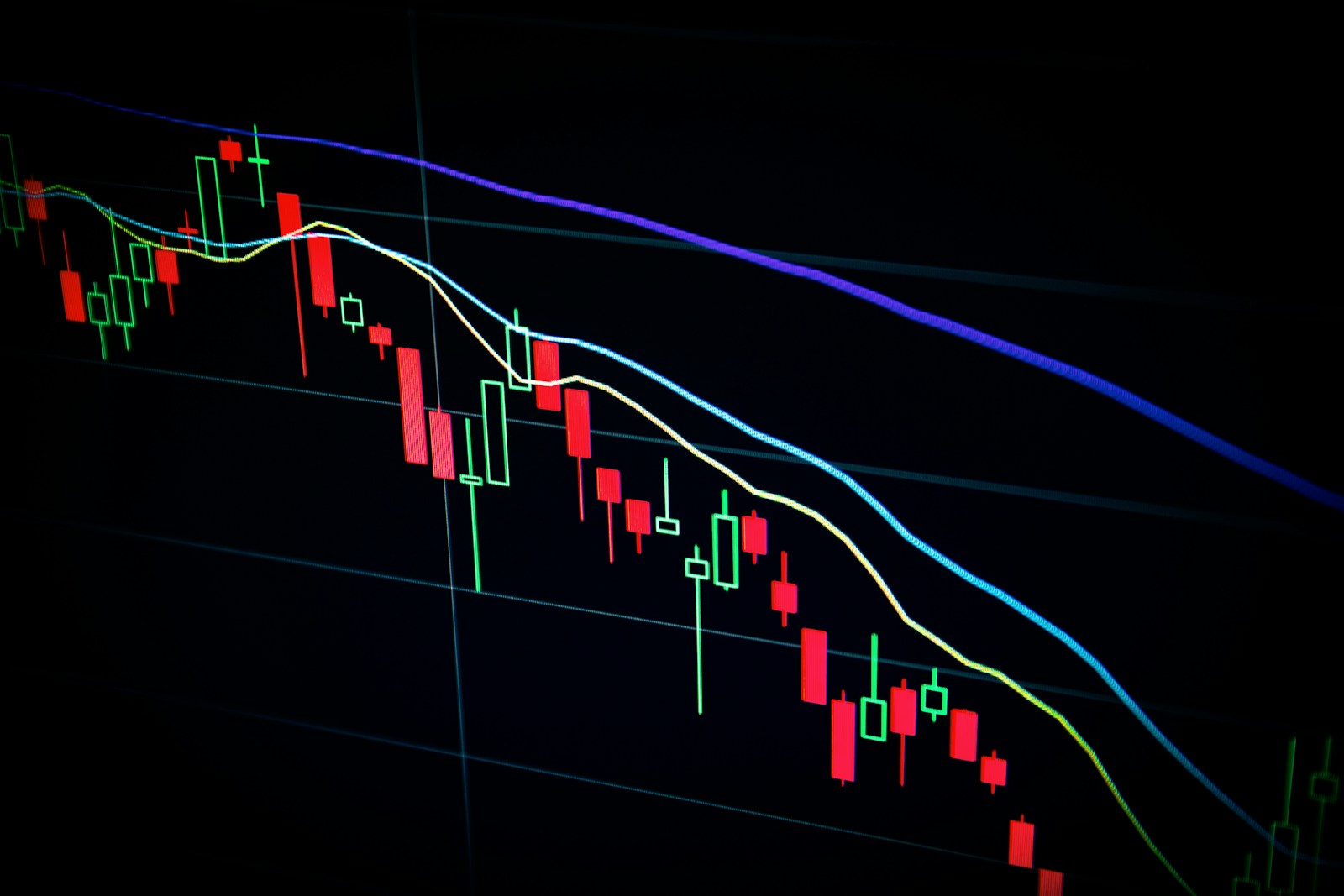
Equilima — Backtest
Key takeaways
- Out-of-sample: Tune train, evaluate holdout, roll windows.
- Regimes: SPY grind vs QQQ drawdowns teach different lessons.
- Social feeds: Ignore perfect curves without segments.
- Past ≠ future: Hypothetical only.
BLUF: One beautiful in-sample curve is a hobby; walk-forward splits are a craft. Using SPY and QQQ, we explain train/test discipline and why early April 2026 is a dangerous time to trust untested rules promoted online. Hypothetical pasts are not futures.
Gaps, volume, and what the opening hour shows
When SPY or QQQ prints well away from the prior close, the move is usually a mix of headline, index futures, and who was positioned wrong overnight. Day traders often care whether the first thirty minutes hold the gap; swing traders care more about whether weekly volume confirms a break. None of that tells you the “right” trade—it tells you what to measure before you size anything.
A gap with weak volume can fade; a gap into real news (earnings, guidance, legal resolution) with heavy turnover often behaves differently. In Equilima’s Markets and per-ticker views, compare today’s range to the twenty-day average range and note whether QQQ is moving with its sector ETF or on its own idiosyncrasy. That single comparison saves hours of narrative arguments.
For Equilima — Backtest work in early April 2026, treat “mover” labels on TV as a starting ping, not a thesis. Your job is to trace whether the business story, the liquidity story, or the macro story is driving—three different risk managers, three different position sizes.
Heavy-volume tickers analysts keep revisiting
SPY, QQQ, and QQQ sit in the category of names that institutions and retail desks alike return to when they need liquidity and a rich news flow—not a recommendation list, but a reality of the tape. In early April 2026, any “watchlist” chatter you hear is already competing with new prints; use Equilima to see current multiples, short interest where available, and recent price structure instead of trusting a static blog table.
If you are hunting ideas for the month ahead, a disciplined approach is: start with a theme (AI capex, consumer spend, bank NII, crypto beta), then require a minimum average dollar volume, then layer one fundamental filter you can defend. The tickers in this article are convenient examples for that drill, not a ranked set of “best stocks.”
Rotate: one week lean on quality metrics, another week lean on revision breadth or price momentum—then note when the same names pass both tests versus only one. That overlap is where homework gets interesting, still without pretending Equilima wrote you a buy ticket.
Numbers swing traders borrow from the 10-Q
Long holders live in free cash flow and return on invested capital; swing traders still care whether SPY’s last quarter showed operating leverage or margin compression, because that sets the tone for the next few weeks of sentiment. Day traders may ignore the filing until a headline forces it—then the filing becomes the only place to see whether management hedged guidance.
Three workhorse checks: (1) revenue growth versus expectations embedded in price—use Equilima’s research snapshots and your own trend lines; (2) gross margin dollars, not only the percentage, for names like QQQ where mix shifts lie; (3) net debt to EBITDA and maturity walls for anything cyclical or acquisitive. QQQ may fail one check and pass two—your journal should say which check mattered most for your horizon.
Non-GAAP “adjusted” lines are marketing-friendly; reconcile to GAAP operating income at least once a quarter. If the gap between them widens while the stock accelerates, you are often looking at a sentiment trade wearing a fundamentals costume.
Math that scales from day trades to multi-year holds
Define risk in dollars before you touch SPY or QQQ: if your account is $50,000 and you refuse to lose more than 1% on one idea, your max loss is $500. Distance to a technical or fundamental invalidation point turns that dollar cap into share size. Day traders compress the distance (tight stops, smaller hold time); swing traders widen it; long holders often size smaller per name because stops are wider or implicit.
Expectancy is won-rate times average win minus loss-rate times average loss—if you do not track those from your journal, your backtest is fiction. In Equilima Backtest, stress the same rule with friction turned up; if edge disappears, you learned something about implementation, not about “the market hating you.”
For longer horizons, CAGR and drawdown tolerance matter more than daily Sharpe. For intraday work, session VWAP and opening range statistics are tools, not religion—use them to contextualize QQQ, not to override a risk limit you set before the open.
Turning the platform into a checklist—not a slot machine
Pick one simple rule (trend or mean reversion) on SPY or a broad ETF, then run walk-forward slices in Backtest: train on an older window, freeze parameters, test forward. Add slippage until the equity curve stops flattering you. If the rule dies with realistic costs, you saved real money.
Repeat on QQQ versus QQQ to see whether your edge is asset-specific or regime-specific.
Backtests that survive a second glance
Sector narratives rotate faster than fundamentals. In early April 2026, you may hear sweeping claims about every name in a theme. Your defense is a short list of stock-specific variables for SPY: what two inputs actually drive the model? If you cannot name them, defer the debate until you can. This is how you avoid becoming a theme tourist.
Plain English: “Support” and “resistance” on a chart are just places price paused before—they are not magic. History rhymes until it does not; always pair charts with why the business cash flows.
Revision trends vs price trends
Regulatory headlines reward triage: proposed rule vs enforcement vs politician quote. Only the first two categories sometimes persist. When SPY whipsaws on news, wait for primary sources before rewriting your notes—emotional trading is expensive homework.
Correlation is not identity. QQQ may trade alongside macro beta for stretches, then revert to idiosyncratic drivers. Educational framing: track rolling correlation versus the index, but do not confuse statistical convenience with economic equivalence. Stories age; relationships break—especially around regime shifts.
Liquidity: the detail that changes everything
Plain English: “Sentiment” is the mood of the crowd—news, social feeds, options activity—not a guarantee of next week’s price. Use it to notice when people are extreme, not as a buy/sell button.
Capital returns are not automatically shareholder-friendly. Buybacks at peak multiples or debt-funded repurchases can flatter EPS while raising fragility. When evaluating SPY, pair repurchase dollars with dilution from stock comp and with leverage trends. The educational payoff is recognizing when “returning cash” is really “re-timing optics.”
International sales and the hidden FX drag
Plain English: Fundamentals are what the company actually reported: sales, costs, cash, debt. If a viral story about SPY does not show up in those lines (after you read the filing), be skeptical of the story.
Liquidity is the silent assumption in every screen. A name tied to QQQ might look statistically perfect yet fail in real trading if average dollar volume cannot absorb your exit. Professionals model impact; learners should at least glance at spreads and depth before celebrating a backtest that assumes frictionless fills. This is especially true when volatility clusters around macro prints referenced in early April 2026.
Why filings still beat the timeline
Walk-forward humility means accepting that parameters stable in one decade rot in another. Testing on SPY through a single bull window flatters trend rules; adding a stress decade reveals fragility. Educational backtests prioritize robustness checks, not screenshots for social feeds—especially in early April 2026 when hype runs hot.
Inventory days rising can signal demand weakness—or strategic stocking, or supply-chain buffering. Context matters: compare QQQ to its own history and to honest peers. Tie changes to management commentary on lead times and component availability. The goal is to practice causal thinking, not to jump to a bullish or bearish label.
Options heat without losing the plot
Scenario thinking beats point forecasts. Instead of asking “where will QQQ trade,” ask what happens to your checklist if growth slows two points, if WACC rises fifty basis points, or if the strongest customer segment stalls. You are not building certainty—you are building robustness so you do not panic on the first red day.
Finally, cross-link ideas: QQQ in isolation is a puzzle piece. Connect it to the macro variable you named, the screen rule you tested, and the risk factor you highlighted. Integrated learners survive messy tapes better than ticker collectors—and Equilima is built for that integration, not for anonymous hype.
The week’s real question under the headlines
Under the surface of early April 2026, the usual arguments persist: how much AI capex is too much, whether consumers crack, whether banks earn the curve. SPY often embodies one side of that debate; QQQ another; QQQ may be the tie-breaker in your own notes when correlations spike.
Tape readers watch breadth, credit spreads, and whether defensive sectors lead on up days—context clues, not oracle signals. If your single-stock thesis on any of these names requires every macro star to align, size down or wait.
Crypto venues differ in rules, insurance, and failure modes. Treat QQQ as a distinct risk object from the equity that tracks it. Education includes studying custody, withdrawal risk, and the difference between spot and synthetic exposure—before size, not after a headline gap.
Stablecoins are not risk-free cash—they are issuer and operational risk wrapped in convenience. If you park funds while researching QQQ, read reserve disclosures and counterparty paths. A stable peg can wobble under stress; plan for that mentally even if you never trade it.
Regulatory headlines reward triage: proposed rule vs enforcement vs politician quote. Only the first two categories sometimes persist. When SPY whipsaws on news, wait for primary sources before rewriting your notes—emotional trading is expensive homework.
Position sizing is where knowledge meets adulthood. No article—especially in Equilima — Backtest—can know your cash needs, job risk, or debt obligations. Cap downside in dollars you can lose without changing your life. If that cap implies a tiny position, that is data, not failure.
Journaling beats memory. After you read about QQQ, write three bullets: thesis, falsifiers, unknowns. Revisit monthly. The gap between your old notes and new filings is where learning compounds—and where you catch your own storytelling before the market does.
Finally, cross-link ideas: QQQ in isolation is a puzzle piece. Connect it to the macro variable you named, the screen rule you tested, and the risk factor you highlighted. Integrated learners survive messy tapes better than ticker collectors—and Equilima is built for that integration, not for anonymous hype.
Plain English: A “multiple” (like P/E) is just price divided by some measure of earnings—high can mean growth hope or overpaying; low can mean a bargain or a broken story. The number alone never tells you which.
Plain English: “Sentiment” is the mood of the crowd—news, social feeds, options activity—not a guarantee of next week’s price. Use it to notice when people are extreme, not as a buy/sell button.
Plain English: Fundamentals are what the company actually reported: sales, costs, cash, debt. If a viral story about SPY does not show up in those lines (after you read the filing), be skeptical of the story.
Plain English: “Support” and “resistance” on a chart are just places price paused before—they are not magic. History rhymes until it does not; always pair charts with why the business cash flows.
Plain English: If a sentence in this guide confuses you, pause and open Equilima on QQQ: look at one chart and one fundamental line. Learning sticks when you connect words to a live ticker, not when you memorize jargon.
The first skill institutional analysts rehearse is separating the filing from the forum. When chatter spikes around SPY, the question is not whether the crowd is excited—it is whether revenue recognition, segment mix, or working capital changed versus your prior model. Retail learners can mirror that discipline by writing a one-sentence thesis before opening a chart. If you cannot state what evidence would prove you wrong, you are gambling with extra steps.
Margin stories age in quarters, not minutes. A beat on QQQ can hide gross-margin pressure if mix shifted toward lower-quality revenue. Cross-check gross profit dollars, not just percentages, and read footnotes on warranty reserves or rebates. In Equilima — Backtest education, the win is building habits that survive a bad tape—because every tape eventually goes bad for someone.
Liquidity is the silent assumption in every screen. A name tied to QQQ might look statistically perfect yet fail in real trading if average dollar volume cannot absorb your exit. Professionals model impact; learners should at least glance at spreads and depth before celebrating a backtest that assumes frictionless fills. This is especially true when volatility clusters around macro prints referenced in early April 2026.
Guidance language is a sentiment lever long before price targets move. Compare how management hedges demand for SPY versus prior quarters: narrower ranges, softer adjectives, or extra caveats often precede revisions—even when the headline EPS still “wins.” Your job is to log those shifts in your own notes so you are not surprised when the stock reacts to the tone as much as the number.
Before you close the tab
Carry forward one habit from this piece: link a headline on SPY to a line item, link a chart on QQQ to a risk budget, link a screen on QQQ to a written rule. Equilima speeds the clicks; it does not replace the notebook.
Revisit after the next earnings cycle with fresh data—static commentary ages fast. Not investment advice.
Walk-Forward Testing: Why One Window Lies (SPY, QQQ Education)